Ukraine holds one of the largest potentials for biomethane production in Europe — up to 21.8 billion m³ annually, which is approximately 20% of the EU’s projected demand by 2050. About 69% of the feedstock comes from agricultural waste, cover crops, and manure.
The technical infrastructure is also favorable: the national gas transmission (GTS) and distribution systems (GDS) cover nearly the entire country — making large-scale deployment technically feasible.
The biomethane production process — anaerobic digestion, purification, and compression — is a mature and well-proven technology. Additional value comes from innovative approaches, such as the use of microalgae as biomass. With a high lipid content (up to 40%) and rapid growth, microalgae blend effectively with agricultural residues, optimizing the carbon/nitrogen (C/N) balance during fermentation.
Ukraine is already moving toward integration into the European market — particularly through joining the Union Database, which enables tracking and recognition of Ukrainian biomethane at the EU level. Several pilot projects across Europe (e.g., AlgaeBioGas in Slovenia, ALL-GAS in Spain) demonstrate that biomethane can be viable even for small and medium-sized farms — especially when combined with local wastewater treatment or greenhouse production.
However, Ukraine’s sector currently faces several barriers. Domestic producers are at a disadvantage compared to their EU counterparts: high logistics costs (4.5 €/MWh to the western border), insufficient support for project development, and limitations in obtaining premium tariffs for exports to the EU.
Overcoming these challenges requires a coordinated state policy, completion of integration into the EU regulatory framework, implementation of transparent trading mechanisms, and zoning instruments — a clear system that allows investors to quickly assess the feasibility of gas grid connection in specific regions. All these steps require not just political will but also real upfront funding.
Ukraine Rebuilding Alliance is actively cooperating with the Decarbonization Fund of Ukraine, one of the few instruments capable of financing high-risk phases of biogas market transformation. This will help launch the first wave of demonstration projects, laying the foundation for market development, proving the technical and economic viability of solutions, and opening the door to large-scale private capital investment.
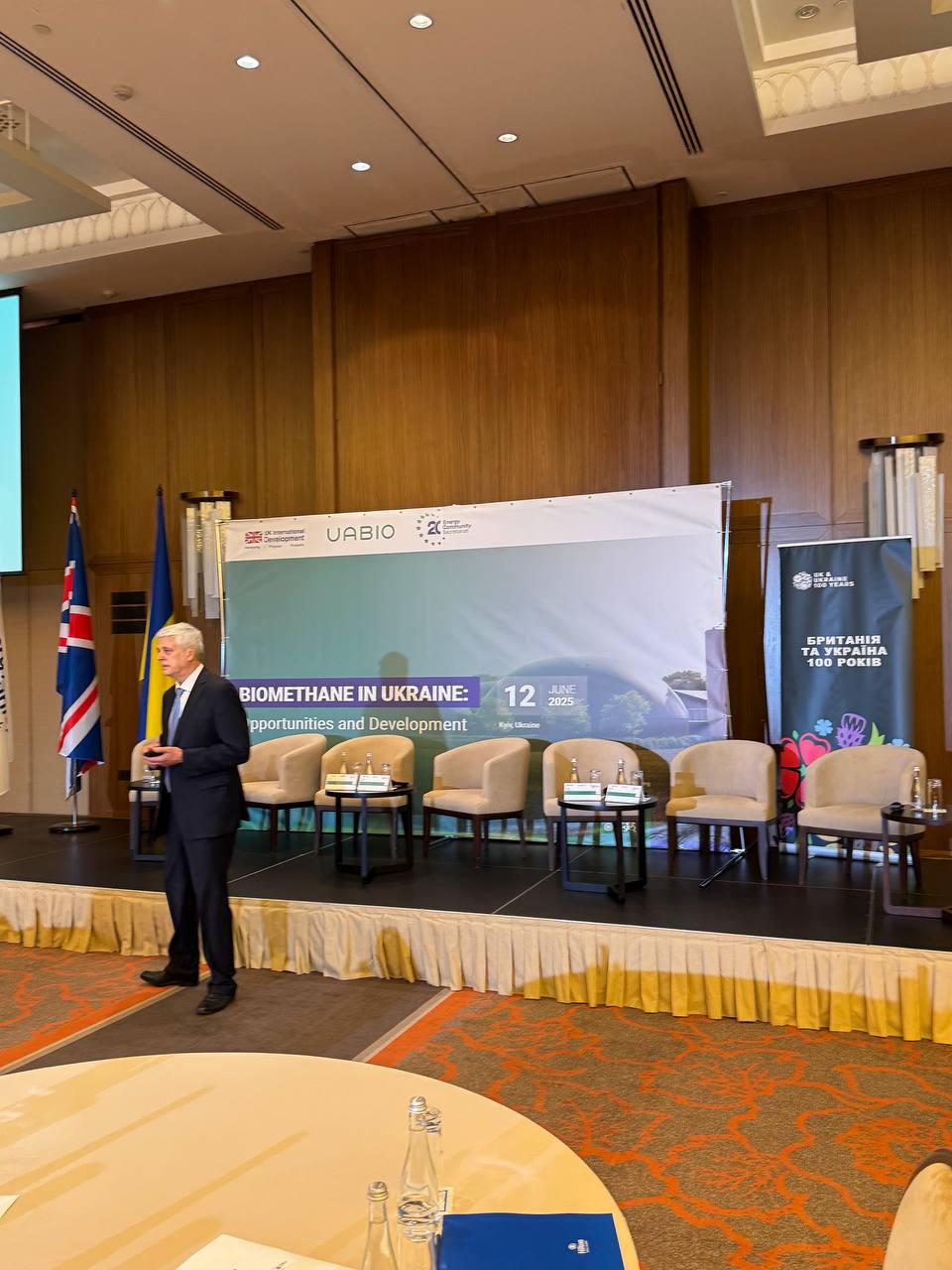
We thank our colleagues from the Bioenergy Association of Ukraine, Energy Community, and the UK Foreign, Commonwealth & Development Office for their professional expertise and in-depth discussion on the strategy for scaling up Ukraine’s biomethane sector.