Across the world, reconstruction is becoming less about recovery and more about redesign.
As climate change keeps accelerating and infrastructure shows its limits, governments and planners across Europe and the United States are turning to the idea of eco-cities—urban environments built for efficiency, resilience, and better living. It brings together design innovation, environmental data, and policy reforms.
Organizations like Ecocity Builders, based in the U.S., have been central to turning theory into practice. They propose four measurable conditions for a true eco-city: compact, walkable design; access to clean energy and water; inclusive and culturally aware planning; and real-time environmental monitoring using tools like Materials Flow Analysis—a method that tracks how resources move in and out of a city.
These standards help city leaders avoid vague “green” goals and focus on results: fewer cars, better buildings, lower emissions.
In the U.S., much of the momentum is coming from the local level. The Better Buildings Initiative, backed by the Department of Energy, has saved billions of dollars in energy costs. The U.S. Green Building Council’s LEED v5 certification is now widely used in both commercial and public construction. Projects like Tecla, a fully 3D-printed house show how sustainable materials and design can come together in entirely new ways.
In Europe, the shift is being led by stronger regulation and cultural investment. For example, the New European Bauhaus supports eco-friendly design that is also community-centered and culturally grounded. Cities like Vienna and Malmö are integrating energy systems, public transport, and affordable housing under strict Nearly Zero-Energy Building (NZEB) standards, which are already law across the EU for new construction.
Examples now span the globe. In Tianjin, China, an eco-city built on once-polluted land now serves as a model for combining smart infrastructure and renewable energy. At the community level, the Smart Cities Challenge connects urban researchers with local governments to design pilot programs for real problems—from traffic congestion to waste systems.
The promoted idea across the world is simple: sustainability should be designed into a city from the start, not added after the fact.
Nowhere is this principle more relevant, or more urgent, than in Ukraine. After two years of full-scale war, cities lie in ruins, and millions are in need of housing. The question is no longer whether to rebuild, but how—and whether the cities that rise will meet the needs of tomorrow, not just repair the damage of yesterday.
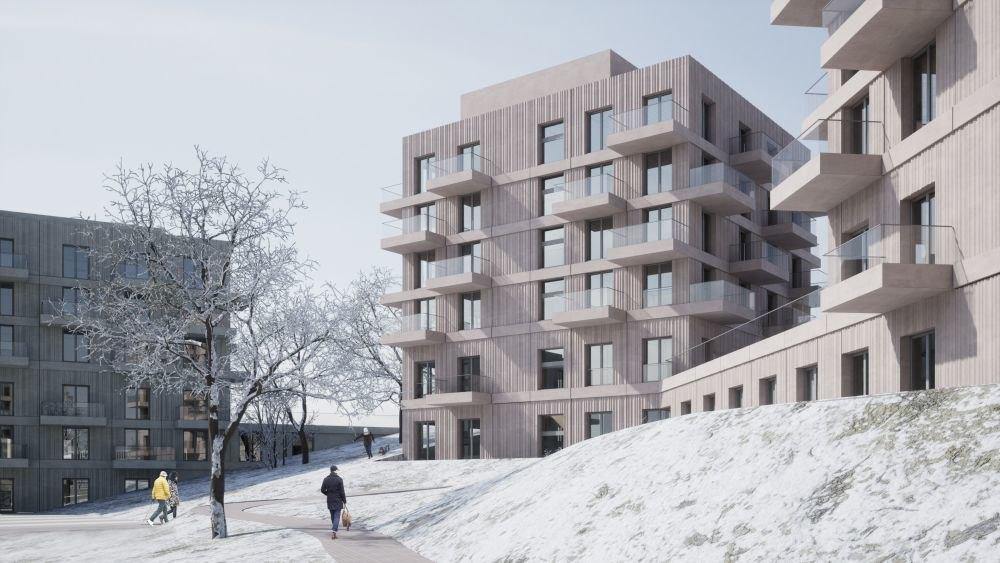
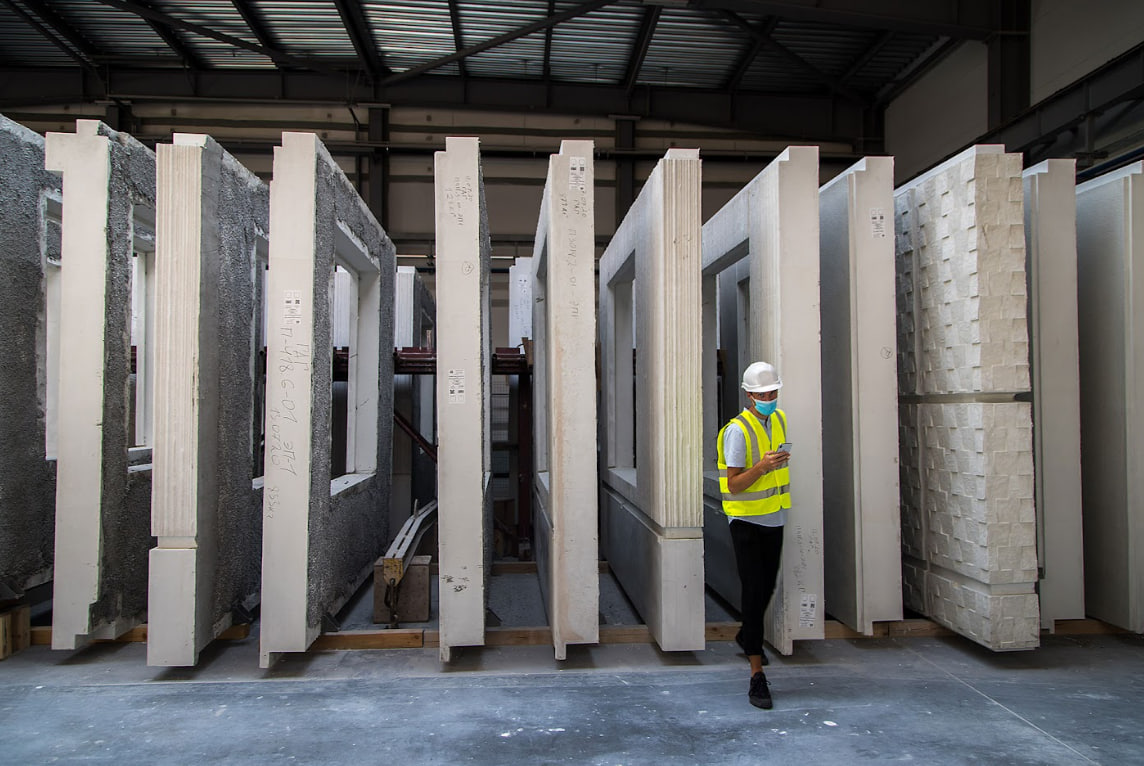
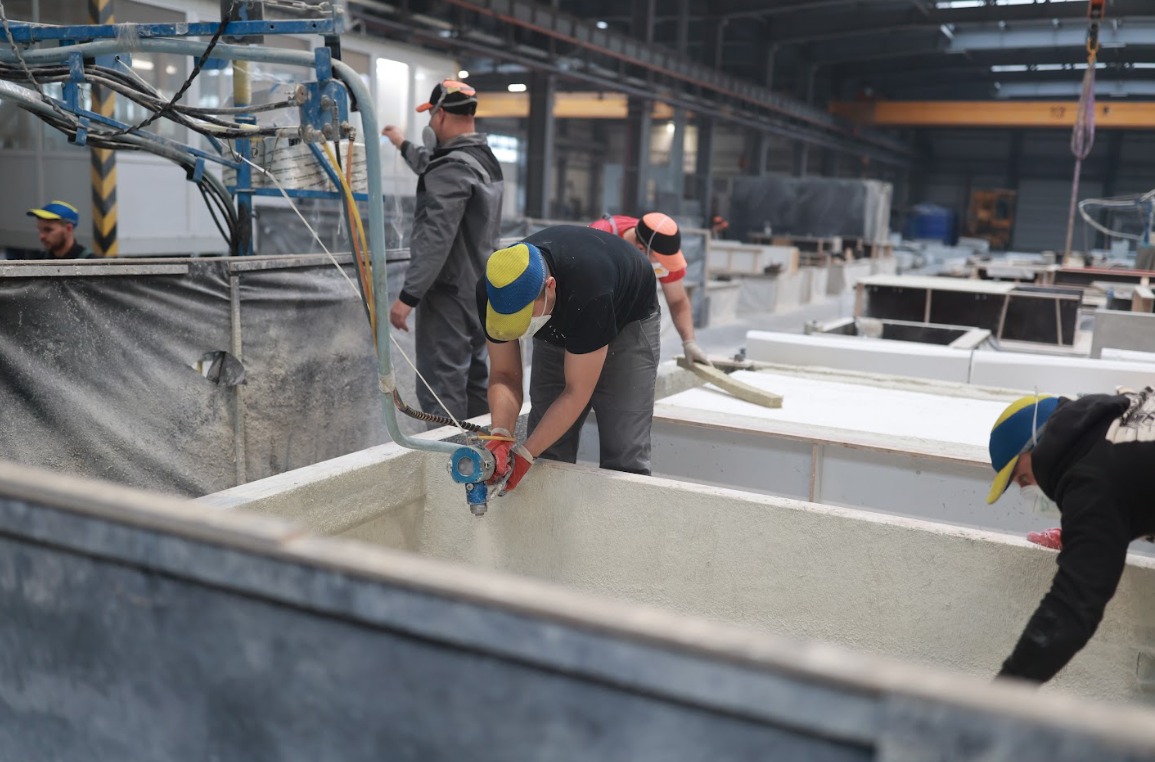
In Ukraine, the first example of human-centered thinking in the construction of new housing was demonstrated by the project for the residential complex of the “UNBROKEN” rehabilitation center in Lviv, designed by the architectural studio of Oleg Drozdov. The project is based on prefab technology, where building elements are manufactured in a controlled factory environment, and only assembled on-site. Drozdov’s proposal won first place in a competition supported by the European Commission as the most aligned with the EU’s requirements for aesthetics, energy efficiency, reliability, and cost-effectiveness.
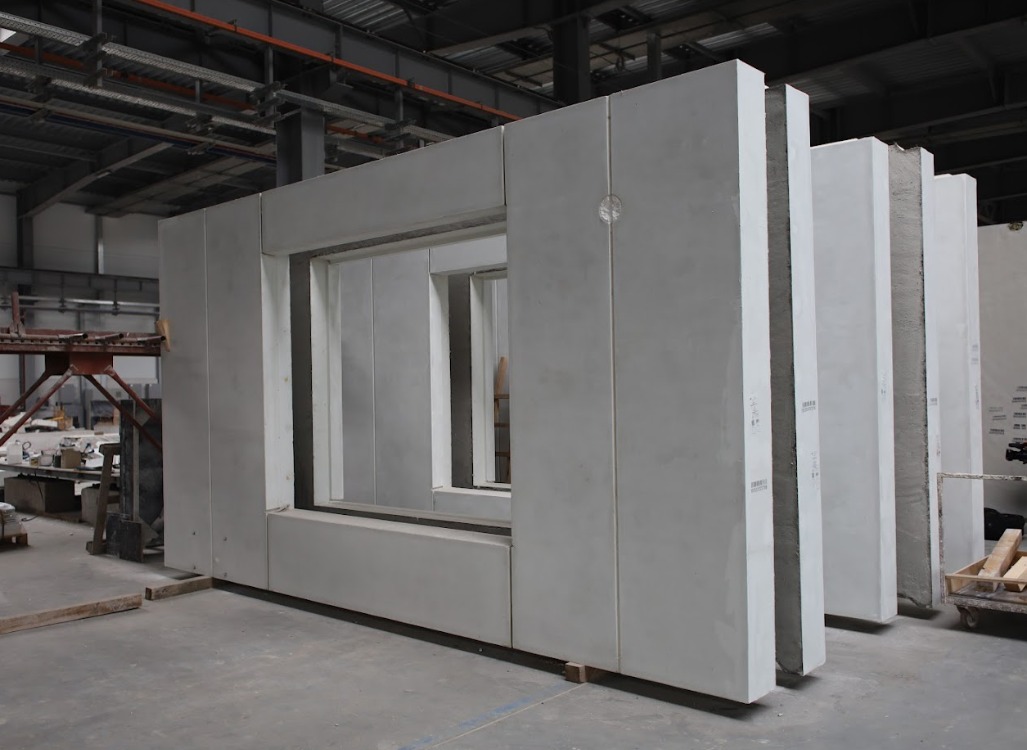
The “UNBROKEN” residential complex is the first building in the country to fully meet high global standards of inclusion. Wide terraces, convenient ramps, barrier-free entrances—everything has been meticulously thought out. A key feature of the complex is the facade-wall system, developed and manufactured by the specialists of the Ukrainian company Well-being ConTech. The facade walls combine a layer of heavy concrete, lightweight polystyrene concrete as insulation, and an outer shell made of glass fiber concrete. This unique panel has allowed for a 30% reduction in heat loss in the residential complex. The installation took just over a month, carried out by only three specialists from the company and one crane.
Today, several cities are interested in projects using Well-being ConTech technology, particularly where the issue of internally displaced persons (IDPs) housing, the restoration of residential infrastructure, and the creation of housing eco-systems are especially pressing. These projects aim to combine quality and safety of life with sustainable development and the architecture of well-being.
Ukraine’s future is bright, full of transformative potential. The challenges of the past have paved the way for a bold reimagination of urban development. Poised to lead in creating cities built on sustainability, resilience, and inclusivity, Ukraine is reshaping its urban landscape to meet the needs of tomorrow. With each innovative project, the country is laying the foundation for eco-cities that will offer sustainable living for generations to come.